Clapham Manual Therapy and Functional Movement

Foot Health and Exercises

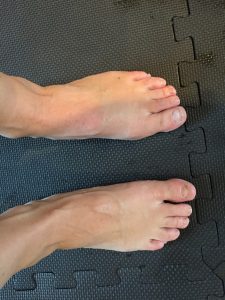
2015-03-09 11.34.01Some great and practical advice about foot health and how to avoid orthotics. I wear ‪correct toes most days to everyone else’s amusement. I also rarely wear anything other than minimal footwear and try to exercise my feet every day. My arches are improving and my toes are spreading back to their natural shape. Compressive shoes combined with poor gait mechanics are a major source of bunions, it is much easier to prevent these at an early stage rather than trying to correct a fully formed bunion.

To get the full article click here.

Prevention of Running Injuries


well_running-superJumbo

This article shows that a conscious effort to land more lightly whilst running decreases the risk of injury. This make take the form of make a conscious effort to land more lightly using heel strike,  or moving to a fore or mid-foot running style as it is harder to land heavily on the ball of the foot.  As an experiment try running a short distance barefoot, landing too heavily will be very painful and so this can give you an indication of where and how you should be landing whilst wearing shoes.  A light stride also indicates that you have more control over your limbs, it is important to build core and hip stability for running to maximise control and enable the proper use of your arms to propel you forward.

For the full article click here.

Osteoporosis Awareness and Prevention Month – May 2016

It is estimated that around 3 million people in the UK have osteoporosis. Osteoporosis is a condition in which the usually strong support struts that make up the inside of most bones becomes thinner, which can lead to bones becoming fragile and breaking easily, resulting in pain and disability.

In the UK, one in two women and one in five men over the age of 50 will fracture a bone, mainly due to poor bone health. But osteoporosis is often a silent condition, giving no pain or other symptoms to alert you to the fact until the worst happens and a bone breaks. As such, many people living with osteoporosis are unaware that they have fragile bones until this happens, sometimes with devastating consequences. Indeed an alarming new study published by the International Osteoporosis Foundation suggested that 37% of men that sustain an osteoporosis related hip fracture will die in the first year following the break.

Those that smoke or drink in excess of the recommended daily alcohol intake are at greater risk, but gender, genetics, age, race and low body weight are all contributing factors.

However, it’s not all doom and gloom. There is a lot you can do to prevent the condition, and to reduce your chance of breaking a bone if you do get it. The best prevention is a good diet high in vegetables, healthy fats and fermented foods to ensure that you are getting a good balance of calcium, vitamin D and Vitamin K.  Without the D and K calcium supplements will likely be excreted or taken into your artery walls rather than bones. Weight bearing exercise throughout your life is also critical to warding off osteoporosis, but it is important to remember that it is never too late to start.  Bone is not an inert substance but throughout our lives will respond and strengthen if loaded appropriately. Please come in and make an appointment if you want any help with diet or exercise to prevent or minimise the effects of osteoporosis.

To find out more about the prevention, diagnosis and treatment of osteoporosis, contact the National Osteoporosis Society via their confidential helpline (0808 800 0035) or by visiting their website at: www.nos.org.uk

Restorative Exercise

restorative exercise

I often give restorative exercises to patients, which are often seen as simple and regressed. Most people need some persuasion to substitute these for their hardcore training regime for a while. But I try to liken it to literacy, your body needs to be able to do the movement basics well – that is learn your letters and words, before you can perform the novel that is running a marathon, playing football or dead-lifting 120kg. So many of us have lost basic movement literacy and fluidity, and this is the root of much musculoskeletal pain.

You can read the full article here.

NICE Guidelines 2016

Nice to see that the new NICE guidelines still recommend manual therapy for ‪#‎lowbackpain‬ alongside exercise and encouraging the patient to keep moving. At Backs Etc we always emphasise exercise and rehabilitation. The aim of the hands-on therapy is to allow you to move more freely and so be able to exercise/ improve movement patterns and daily habits to get you out of pain faster. It is impossible to make changes in 1 hour per week treatment, if they are not supported by changes made by the patient is the remaining 6 days and 23 hours.


http://www.ncor.org.uk/news/nice-draft-guidelines-for-low-back-pain-2016/?utm_content=buffer832d7&utm_medium=social&utm_source=facebook.com&utm_campaign=buffer

Vitamin D testing

essential-vitamin-dI often tell my patients to get their vit D levels checked.  As this article shows a deficiency can cause problems in all  body systems from gut dysfunction to immune system and joint health. Deficiencies have been implicated in multiple sclerosis too. If you don’t get sun on about 50% of your body – without suncreen for about 20mins in the middle of the day each day during the summer, then you may be deficient.  The test can be done simply by sending off a blood spot, and this is a good time of year to do it,as unless you’ve been away for some winter sun your levels are at their lowest for the year.

If you do need vitamin D then you should also consider taking Vitamin K2 as well to ensure that the calcium is deposited into your bones and not your arteries leading to atherosclerosis.

Read the full story here.

You can get your vitamin D levels tested here.


Boning Up On Broth

bone-broth1I often tell my patients that one cheap and simple thing they can do to improve their nutritional status is to start making and eating bone broth.  My husband’s blog tells you exactly how and why to do it! For one thing if you have any gut issues it contains all the amino acids you need to soothe and rebuild the gut lining.  It also contains copious amounts of chondroitin and glucosamine, which people often take in expensive supplement form to ease their joint pain.  Broth is easily absorbed and almost free!

To get the full article click here.

The importance of Jaw Dysfunction

skullThis blog post explains how the jaw becomes tight and painful as a reaction to a lack of stability elsewhere in the body. Thus it is important to address the underlying stability issue rather than just treating TMJ pain as a stand alone problem. make an appointment at Backs Etc. if you want an assessment.


Click here for the full article.

Barefoot shoes and advice for transitioning

An interesting discussion of ‪#‎barefoot‬ shoes and training and some exercises and ideas on how to make the transition and what to look for in a shoe that will support our foot and overall health. Wearing most conventional, stiff shoes is like wearing a cast and causes the muscles and joints in your feet to fall asleep, but it takes patience and rehab to wake them up again. If your arm had been in a cast for 3 months you wouldn’t just go out and use it normally without doing some rehab, so if you’ve been wearing conventional shoes all your life, buying a pair of barefoots and going out for a run is asking for trouble. Start off by just walking around at home barefoot as much as possible. Take things slowly.


https://www.t-nation.com/training/truth-about-barefoot-training?utm_source=facebook&utm_medium=social&utm_campaign=article3909

Affects of Stress on your Body

This short video shows how stress affects the processes and function of your body and why you really need to address this to avoid many common chronic diseases:

https://www.youtube.com/watch?v=2j-ewV5dos8