
Recently, we spent a weekend in New York at the Animal Flow level 1 course. For those of you unfamiliar with it, Animal Flow is a fitness programme that combines quadrupedal and ground-based movement with elements from various bodyweight-training disciplines to create a fun, challenging workout emphasizing multi-planar, fluid movement. The primary movement patterns are based on animal movement, but in the programme, we recognised elements of parkour, yoga, breakdancing, and gymnastics.
We have decided to incorporate elements of Animal Flow into our training at Backs Etc. because we realise the value of a system requiring no equipment that can increase and/or improve:
- Mobility
- Flexibility
- Stability
- Power
- Endurance
- Skills
- Neuromuscular development
In addition, Animal Flow can be fun. How many other workouts have you slinking along the floor like a hunting beast, scuttling like a crab, and bounding about like an ape? This aspect of the programme is an important part of our philosophy that we should all be incorporating more fun into our lives, especially in physical endeavours.
So how is Animal Flow beneficial to us?
It utilises closed-chain exercises
Most bodyweight training exercises, such as those in Animal Flow, are closed-chain, which means that limbs connect to the ground or another immovable object in a constant fixed position, and resistance is created by pushing against it, moving the body rather than the object. For instance, a bicep curl or leg extension is open-chain, whereas a push-up or squat is closed-chain. Most fitness experts agree that closed-chain exercises are preferable because:
- Closed-chain exercises better mimic activities of daily living, which means they improve your “functional” fitness. They’re great for athletes, too, since sports require multiple joint and muscle movements to happen at once. Very few movements in real life or in athletics isolate joints and muscles like open-chain exercises do.
- Closed-chain exercises work many muscle groups at once. That’s great for the reasons above, but also because you can get more benefit in less time.
- Closed-chain exercises are safer for your joints—especially the knee joint, which is very vulnerable to stress and injury. The force involved in closed chain exercises like lunges and squats is compressive, meaning it actually stabilizes the joint and helps strengthen it. In contrast, open chain exercises, like knee extensions or hamstring curls produce shear force, which stresses the knee joint (and the ACL) and is more likely to result in injury.
It focuses on multi-planar movement
The benefits of multi-planar training are closely related to those described with closed-chain exercises. The goal of multi-planar training is to utilise the entire body to move and/or stabilise instead of working an isolated muscle. Most day-to-day activities and resistance training programmes are sagittal plane-dominant. The sagittal plane refers to front-to-back movement when looking at someone from the side. So, for instance, walking and bench pressing are taking place in the sagittal plane, and many exercise programmes over-emphasise these types of movement. Frontal plane exercises are those that go side-to-side. An example of this is a side lunge. Finally, there is the transverse plane, which involves rotational movements.
The beauty of Animal Flow is that, when putting together a flow of various patterns, you are training in all three planes of movement. By involving all of the major muscle groups, this provides a balanced training approach that helps increase overall function and decreases the risk of injury. Most injuries occur in the frontal and rotational planes, so working these is essential to reduce risk.
It utilises slings and chains
You may think, “Whoa, this sounds a bit S&M!”, but slings are the kinetic chains that connect contralateral arms and legs on walking and running. The majority of the Animal Flow travelling forms fully activate these slings and chains, providing excellent benefits for improving the way we walk, run and move. When we load the slings with our body weight, and put them into motion, we further enhance the neural sequencing and conditioning of all the muscles.
It features quadrupedal movements
Crawling patterns are an important part of neural development stages. After all, babies need to learn to crawl before they can walk. We’ve always practised crawling patterns ourselves and trained clients to do so, but Animal Flow takes these movements to the next level. For example, the ‘Beast Crawl’ correlates to our normal walking and running gait patterns, using the same neural sequences, so an ability to crawl fluidly with control will translate into better walking and running form, thereby improving performance and reducing the risk for injury.
If you’re interested in exploring how Animal Flow techniques can help with your general fitness, athletic performance or rehab, drop us a line. We’re excited to have incorporated this methodology into our own workouts, and we’d love to share this knowledge with you!


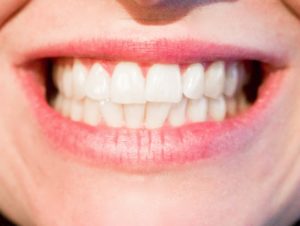 We have many clients at Backs Etc who clench their jaws to assist in getting stability, this post explains why. Bottom line if you clench your jaw and/ or grind your teeth it is likely that you have a core stability problem that needs to be addressed as the jaw is just part of a compensation pattern.
 This video is about the importance of training yourself to breathe properly to improve health and even exercise performance. The series Stranger Things has somewhat brought the term “mouth breather” back into circulation, but there needs to be more education on the importance of avoiding breathing through the mouth at all times – even when asleep.
 This is a fascinating interview with Dr. Robert Lustig on the difference between happiness and pleasure, and how the two are driven by different chemicals – Dopamine and Seratonin. In a nutshell, Dopamine governs pleasure, while serotonin governs happiness – and the two do not overlap, says Lustig. Pleasure is short-lived, visceral, can be had alone and can be brought about by substances or behaviours. Happiness is long-lived, ethereal, usually social and cannot be had from substances or behaviours.
 At this time of year when we are busy buying gifts for people that already have so much, why not buy something for someone who is in real need?
 Here is an interesting article on what meditation can and can’t do. It is becoming very popular for good reason. We try to meditate for 10-30 minutes every day, but it is not a universal panacea. Recently we have been using the
  Here at Backs Etc., we’re obsessed with saunas. But not just for the calming benefits a nice sauna session gives us. There are also a number of ways in which regular sauna sessions can help us physically, as well as mentally. These include boosting strength and endurance and even building muscle.
 Many of us only think about our liver when we’re abusing it, usually with too many cocktails after work on a Friday. However, we don’t tend to consider the myriad of functions that the liver performs for the body. In fact, the liver’s ‘to-do’ list is second only to the brain, numbering about 300 These tasks include systematically reworking the food we eat into usable building blocks for our cells; neutralizing the many potentially harmful substances that we incidentally or deliberately ingest; generating a vast pharmacopoeia of hormones, enzymes, clotting factors and immune molecules; controlling blood chemistry. And that’s just for starters…
 This is the first time that we’ve recommended a movie on the Backs Etc. blog, but we found this film to be so interesting and informative, not to mention fun to watch, that we felt it was worth highlighting. In a similar vein to Supersize Me, filmmaker Damon Gameau documents the effects of eating supposedly healthy foods that contain high amounts of sugar, to frightening effect. Whilst it may sound grim and depressing, it’s presented in such a way that makes for very enjoyable viewing, as well as being eye-opening.
 This concise article explains the importance of grip strength, including the somewhat frightening study which found that grip strength is closely correlated with all causes of mortality. On the positive side, it details a few resistance training exercises that are excellent for improving your grip strength. At Backs Etc., we work with many clients on improving their grip, through bodyweight, dumbbell and kettlebell exercises.