
The Whys and Hows of Sleep

If you want to enjoy a long, healthy, energetic and productive life, it is pretty much agreed that you need to work on four basic areas: nutrition, exercise, stress and sleep. In this post, I’m going to focus on sleep as it is something that many people (and I include myself here) struggle with.
Why is Sleep so Important?
There is a very rare condition called Fatal Familial Insomnia (FFI) whereby sleep becomes impossible, it leads to panic attacks, hallucinations and eventually death, with no known cure. Thus this shows that sleep is essential to stay healthy. Recent research has found the existence of the glymphatic system which drains metabolic waste products from the brain via the cerebrospinal fluid (including those pesky amyloid plaques that build up during the progression of dementia). This system only works when we are in deep sleep, making regular good sleep essential for maintaining brain health, aside from other body maintenance and repair processes that occur mostly whilst we are asleep. It has also been shown that good sleep is essential for memory formation and that mood and willpower problems are exacerbated by a lack of sleep.
Why do we have so much trouble with sleep?
Until recently, our sleep cycles were driven by circadian rhythms with the rising and setting of the sun driving the release of hormones and brain wave patterns. Now the abundance of electric lights and digital stimulation after dark, as well as jet lag and shiftwork has disrupted this primal cycle. Most people find that when they go camping, with light being limited to torches and the campfire, they start to sleep much better, especially if they have a comfortable airbed
What can we do about this?
The key is to support your body’s production of melatonin, the sleep hormone which is triggered by darkness, and is suppressed by light – particularly bright white light at night – including these new energy efficient bright LED street lights that are replacing many of the old yellow ones. So here are a few tips which I try to implement most days to support melatonin production and sleep cycles:
 Are more and longer exercise sessions always a good thing? Exercise is a stressor. Usually a good one. But a stressor nonetheless.
 People often ask us what kind of diet we recommend. “Are you guys paleo?” is one we also get a lot. We lean more towards the Primal diet (and lifestyle). In this article, Mark Sisson, the founder of The Primal Blueprint, gives a good explanation of the differences between “Primal” and “Paleo”.
 In this concise article, the author describes the importance of good sleep and mindfulness in ‘cleaning’ your brain to build and strengthen positive neural connections. Your brain gets really good at whatever it does all the time, so you need to devote time to the things you want to be good at, whether that is studying for exams or playing golf. If you constantly think negative and anxious thoughts your brain will get much ‘better’ at being anxious. Sleep is when the brain embeds the pathways that you are forming during the day, so without good sleep, all the practice and studying will not be fully effective.
 This academic article explains how ankle sprains create ongoing issues on the body if left untreated, which may result in further sprains and changes up the kinetic chain resulting in pain and injury almost anywhere else in the body. At
  Here at
 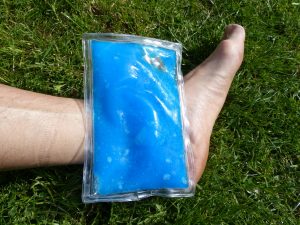 Following on from last month’s blog post about the benefits of cold water swimming, I want to talk a little about the common habit of icing injuries. I have recently become less convinced that the ongoing use of ice following a soft tissue injury is a good idea. You are probably familiar with the use of ice to control local inflammation following an injury. In fact ‘Rest Ice Compression Elevation (RICE)’ is considered by most to be the gold standard treatment when they have pulled a muscle or sprained an ankle, along with popping a few NSAIDs. However, whilst this approach may relieve the pain from injured tissue, it actually slows the healing process.
 Okay, maybe this title is a little extreme. However, this article makes a strong case as to why we should be strength training rather than running or performing other long slow distance – or LSD – activities. The author breaks down a number of reasons why ‘chronic cardio’ is less effective at improving your health, and can actually be detrimental to it in some ways According to the article, Strength training, in contrast, is much more beneficial as the basis of a fitness program, with less of the negatives.
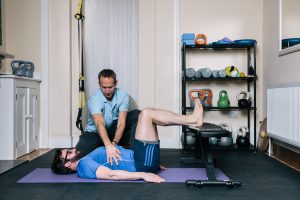 Proper breathing technique is something we focus on at Backs Etc in both our therapy and training appointments. Without addressing poor breathing mechanics, it can be hard to make lasting changes to a patient’s pain or dysfunction. Often the problem stems from the inability to build intra-abdominal pressure (‘IAP’) using diaphragmatic breathing, and so there is an over-reliance on neck or back muscles that become painful.
 We think we eat to feed ourselves, whereas in reality for health it is of utmost importance to feed the