Clapham Manual Therapy and Functional Movement

Vitamin D ‘proved to cut risk of colds and flu’

I often tell my patients to get their vitamin D levels checked. As this article shows a deficiency can cause problems in all body systems from gut dysfunction to immune and respiratory systems. Deficiencies have been implicated in multiple sclerosis and some cancers too. If you don’t get sun on about 50% of your body – without sunscreen for about 20 minutes in the middle of the day each day during the summer, then you may be deficient. The test can be done simply by sending off a blood spot and it only costs £28. This is a good time of year to do it, as unless you’ve been away for some winter sun your levels are at their lowest for the year.

Read the story here.
Eight in 10 middle-aged Britons ‘are overweight or exercise too little’

overweight-britons
image courtesy of The Guardian

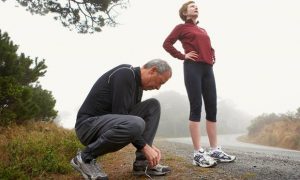
Did you know that back in the 19th century type II diabetes affected around 1 in 30,000 people, now it is up to 1 in 3. As this article discusses this is a serious disease. However, in most cases, it is completely preventable by lifestyle changes. On a simplistic level, It is a problem of excess sugar, we eat so much more than our ancestors ever did, and we’re not moving so this glucose is going straight to our fat cells or staying in the blood damaging the arteries.


Read the full article in The Guardian.

No diet, no detox: how to relearn the art of eating

food-choices
image courtesy of The Guardian

Fascinating article on food choices as learned behaviours:

“In today’s food culture, many people seem to have acquired uncannily homogenous tastes. In 2010, two consumer scientists argued that the taste preferences of childhood provided a new way of thinking about the causes of obesity. They noted a “self-perpetuating cycle”: food companies push foods high in sugar, fat and salt, which means that children learn to like them, and so the companies invent ever more of these foods “that contribute to unhealthy eating habits”. The main influence on a child’s palate may no longer be a parent but a series of food manufacturers whose products – despite their illusion of infinite choice – deliver a monotonous flavour hit, quite unlike the more varied flavours of traditional cuisine. The danger of growing up surrounded by endless sweet and salty industrial concoctions is not that we are innately incapable of resisting them but that the more frequently we eat them, especially in childhood, the more they train us to expect all food to taste this way.”

Read the full article on The Guardian.

5 Powerful Natural Antibiotics That Don’t Require A Prescription!

5-natural-antibiotics
image courtesy of foodmatters.com

During cold season it is useful to have some remedies in your toolbox that can fight infections without wrecking your digestive system. Get rid of infections without the digestive destruction, with these five powerful natural antibiotics. In particular, I use oil of oregano to fight off colds and other minor infections. Save the antibiotics for when they are really needed.


Read the full article 5 Powerful Natural Antibiotics That Don’t Require A Prescription!.

10 myths about back pain and how to cope when it strikes

back-pain
image courtesy of Independent.IE

This is a very informative article which deals with many common misconceptions about back pain, including the idea that it is usually an indication of damage (it is not) or that the back is fragile. It is incredibly strong and designed for bending and lifting. Often pain is triggered by something minor such as twisting or bending down. In this case, it is likely due to repetitive poor movement patterns (which can be changed) or sensitization of the nervous system due to other factors such as poor sleep, stress or previous unresolved injury to knee or ankle. If you are suffering from back pain that doesn’t resolve after a few days, make sure to see a therapist who will consider all of the contributing factors. If you’re in London we would love to see you at Backs Etc. to put together a treatment and movement training program to get you back on your feet.

Read the full article 10 myths about back pain and how to cope when it strikes.

Why you should consider going barefoot

barefoot-1149848_1920I recently attended the Barefoot Training Specialist course with Dr Emily Splichal.  You may ask why such a course is necessary – if you want to go barefoot surely all you need to do is take your shoes off, or buy a pair of those strange Vibram five finger shoes and then just get on with it.  However, if you have spent most of your life wearing stiff, vibration-damping casts on your feet, AKA ‘normal shoes’, then you need to do some work to get your body ready for going barefoot. Remember that each foot contains 26 bones (a quarter of all the bones in the body) along with 33 joints and over 100 muscles and tendons, so it’s not an inanimate slab, but a highly adaptable, active base that allows us to move across all types of terrain. Feet actually need the sensory input and movement provided by the varying surfaces and slopes of the ground in order to be healthy. Wearing conventional shoes can be analogised to wearing a plaster cast on a limb for several months. At the end of that period, the limb is both muscularly weak, and neurologically deficient from the lack of stimulation.  As this Guardian article shows, learning to strike forefoot and using minimalist shoes reduces injuries. So even if you have no intention of going barefoot, but you want to avoid or get rid a plethora of lower extremity issues such as shin splints or Achilles tendon problems, then read on.

Read More

British Heart Foundation – Vinnie Jones’ hard and fast Hands-only CPR

vinnie-jones-first-aidI recently re-certified in First Aid, partly so I can fulfil my duty of care to my patients if there is an incident at the practice, but also to give me the confidence to help if I come across an incident where someone has collapsed. Two important take-aways from the session are that if someone is not visibly breathing the most important thing is to move them onto their back to be able to assess them and start CPR if necessary, whilst help is on the way. This is the case even if you suspect a neck injury, although of course try to move them as gently as possible. Then when doing CPR as demonstrated in this video, you just need to do the chest compressions to keep the blood circulating, you don’t need to worry about the rescue breaths.

Watch the video here.

Why the Blood-Brain Barrier Is So Critical (and How to Maintain It)

why_the_blood_brain_barrier_mattersYou’ve probably heard about leaky gut, but are you aware that there is a barrier that prevents harmful substances getting into our brains. Damage to this blood brain barrier is implicated in Alzheimer’s and Parkinson’s. The steps listed here to protect your brain include making sure you get enough magnesium in your diet, drinking coffee and tea, and most importantly getting enough sleep and reducing stress.

For the full story click here.

How to Build a Happier Brain in Two Easy Steps

hardwiring-happinessAn interesting article that shows how we are hardwired to focus on negative rather than positive experiences. So that happiness is something that needs to be practised. Try and focus on and savour a small pleasure each day.  It could just be the taste of a cup of coffee or the sun on your face on the morning walk to the office, it all helps to reset the brain.

For the full story click here.